
There are some instruments that seem to come preloaded with an aura of effortless cool. The saxophone is one of them. It wails, it sings, it smoulders. It can spit and it can sputter excitedly. It is the voice of jazz clubs, cinematic sunsets, and late-night existential crises. In the right hands, it is an endlessly versatile, expressive instrument. It’s such a shame that I do not possess said hands…
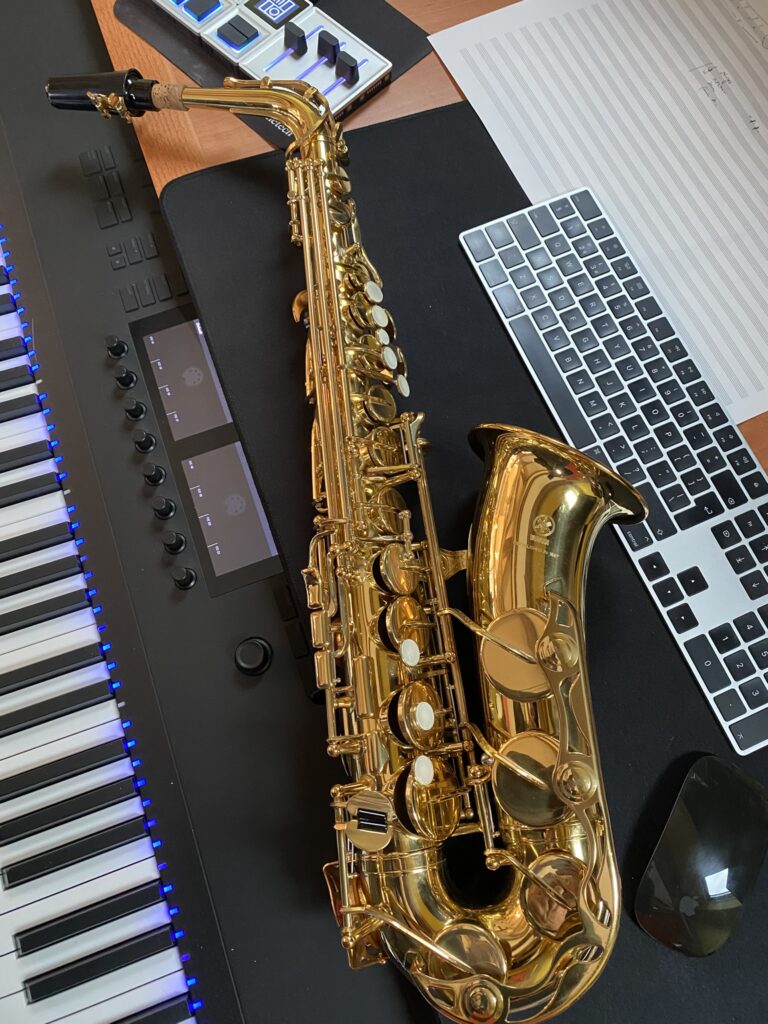
For the record, let me clarify: I do not, in any way, shape, or form, play the saxophone. However, I do have a strong belief in the power of sound design and an even stronger belief that when you can’t find the perfect sample library, you should just make it yourself. So, here I am, surrounded by an unruly brass tube, a collection of microphones, and a sense of impending disaster. The results so far have been less than encouraging, but ever the optimist, I’m soldiering on.
Why the Saxophone?
The saxophone is going to be a key feature in my upcoming Soundscape Number Four, which is, in turn, a preparatory piece for a film soundtrack I’m working on later this year. The director has given me an incredibly open-ended brief—essentially, “Do what you like, so long as you’re certain that I’ll like it”. Since vague instructions are both liberating and terrifying, I’ve decided to present him with a series of different sound worlds in which we might establish the final vibe of the film.
I have spent years searching for the perfect saxophone sample library, only to find that most of them either sound too pristine or too chaotic. Some simply sound nothing like saxophones at all. I need something organic, something that’s a bit on edge, something that feels alive. Thus, my latest endeavour: recording my own bespoke saxophone sample library, despite my complete lack of skill in the saxophone department.
The Recording Process (or, How to Annoy Your Neighbours)
Experimenting with different saxophone sounds has been an adventure in trial and error—mostly error. I have tried breathy whispers, aggressive honks, and eerie multiphonics (which I have been claiming are deliberate. Yeah, right). I have blown into the mouthpiece with great gusto, and attempted some subtly breathy atmospheric sounds(!!) and now I am fairly certain that the farmer next door is going to accuse me of sheep worrying.
Since my playing ability is… let’s say, developing, I’ve had to get creative with microphones and processing. Close mic’d breathy notes? Check. Distant, reverb-soaked howls? Absolutely. Saxophone through a distortion pedal? Why not. Reverse saxophone drenched in granular synthesis? Now we’re talking. The goal is not to create a traditional saxophone library but to generate raw material for sound manipulation—fragments of notes, overblown screams, airy textures—that I can shape into something unique.
The Final Goal
Once I have assembled this collection of bespoke saxophone sounds, I’ll use them as the foundation for some creative processing. Maybe I’ll stretch them into ghostly drones, chop them into rhythmic textures, or twist them into something entirely unrecognisable. The beauty of this approach is that I don’t need to be a good saxophonist (which is just as well) – I just need to capture something interesting.
So, if you hear a strange, otherworldly oddness drifting through some of my next compositions, know that it may have been born from this chaotic mucking about. Will it sound cool? Hmm – I’m not sure yet. Will I ever be able to play “Careless Whisper” convincingly? I very much doubt it.